

Ashley McBryde Gets Emotional Opening Up About Her Journey To Sobriety: ‘I Was Going To Die’
McBryde held nothing back in a new conversation with Bobby Bones.
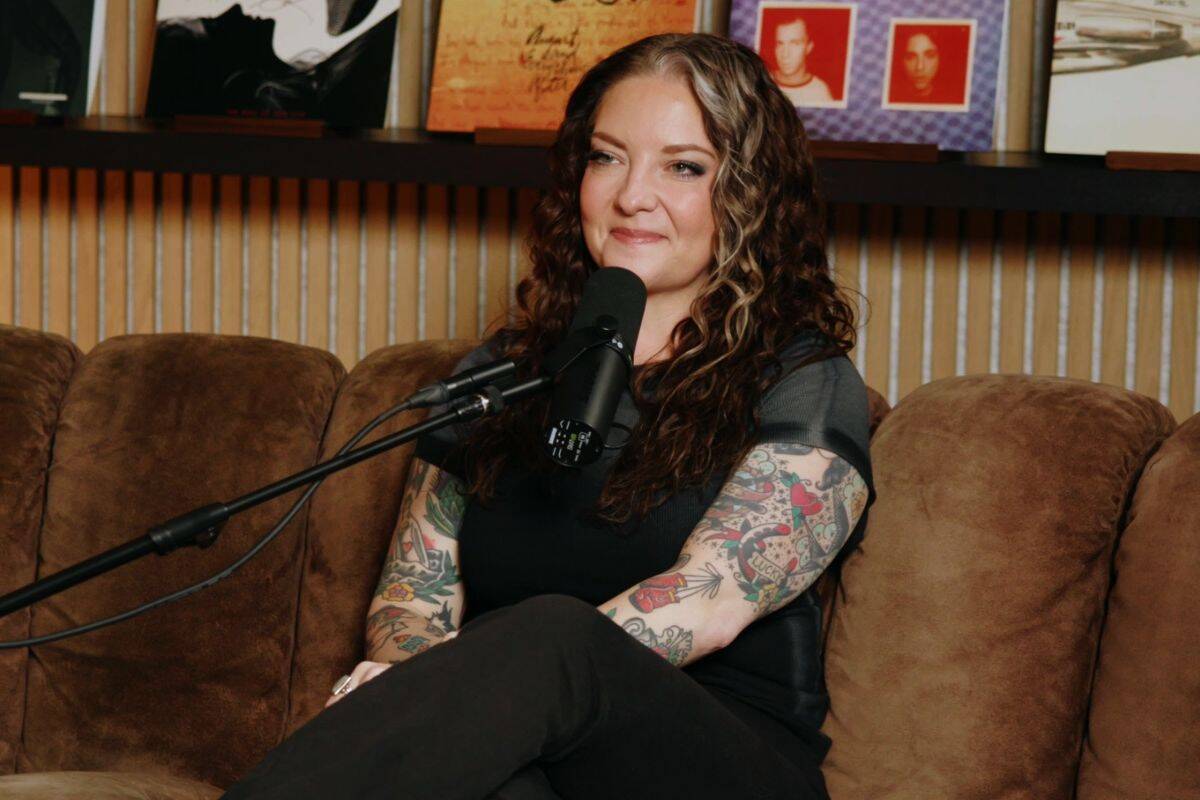
Ashley McBryde; photo Provided
This June, Ashley McBryde will celebrate four years of sobriety, a milestone that didn’t come easily. Amid her rising career, she found herself in a downward spiral that few people, not even her parents knew about, leading her to make a change that would impact her life forever.
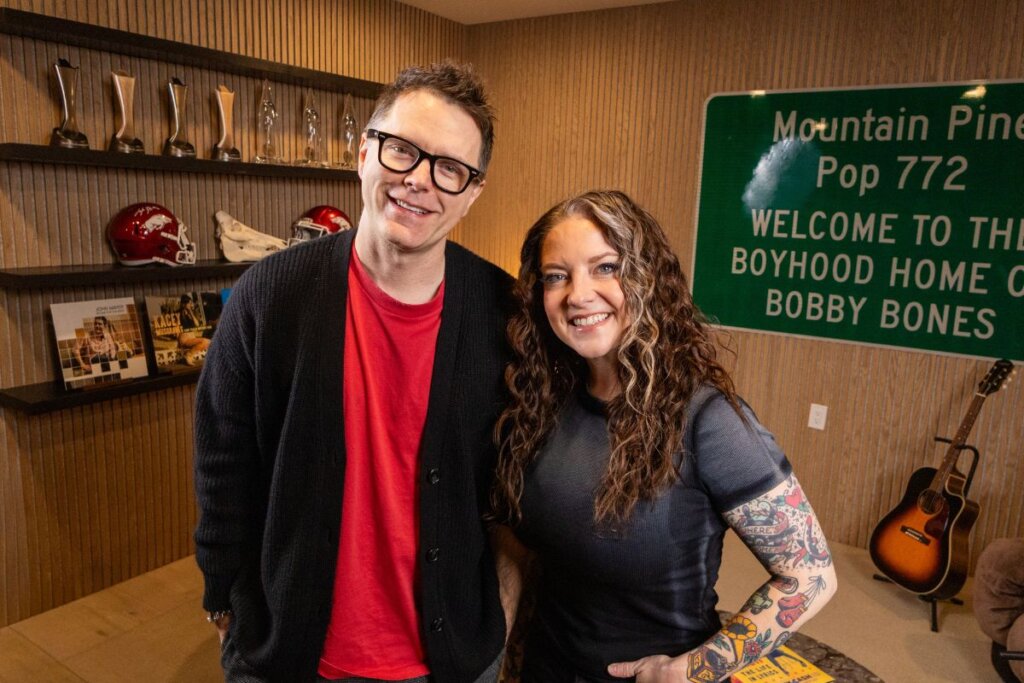
McBryde appears on a new episode of on Bobby Bones Presents: The BobbyCast, where she opens up about her sobriety journey and the emotional and physical turmoil that she was facing behind the scenes while still maintaining a successful music career.
“When it went off the rails, it went off the rails in a big way. And as I’ve had to say over the last three years, I’m a drunk. And if you find yourself wanting to be like, ‘No, you’re not.’ That’s how good I am at it. I’ve had people say, ‘I never really saw you as much of a drinker.’ And so now I can say, ‘if you were around me prior to three years, nine months, six weeks, and however many days ago, I was drunk. Sorry. I am sorry,” she told the show’s host, Bobby Bones.
The Arkansas native explains that she did not embarrass herself, her team or the country music genre in the midst of her battle with addiction, however it became more and more evident that her struggles were getting worse. McBryde tried to get a handle on it by not drinking before shows, but she found herself turning to the bottle to calm her anxiety before meet and greets and then letting loose after shows.
“For some reason, my brain was like, ‘You didn’t drink till after a show and now you have to drink as much as humanly possible.’ And so everybody that I work with, everybody I was close with, not even my parents knew the extent of it,” she revealed.
McBryde says she felt angry over the fact that the substance had taken control of her life, and she knew staying in treatment was the only way to reclaim it. “I was going to die,” she admitted.
“I kept being like, “I can’t do this. I don’t know where I am. I can’t … Oh my God, I have to do this. I mean, I’m going to do it. They got me here. I’m going to do it. ” But I just kept being like, “There’s no way I’m doing this for 30 days. That’s insane. I don’t live under a bridge. I didn’t hurt anybody.” And now I can hear my other self going, “Oh kid, sit down and shut up and put your seatbelt on.”
Her wake-up call came after a night she barely remembers when she woke up in another artist’s home to find her team ready with an intervention, determined to get her the help she needed before it was too late.
“I woke up in a bed that’s not mine, in pajamas that aren’t mine, and I was like, ‘Oh my God, that must have been a doozy. I’m thirsty. I don’t know where I am, and I don’t know where water is, so I’ll just go find water.’ And when I went to find water, I found a living room, and in that living room was my team, Dana and John Peets and my day to day. I looked at them and that artist was also on the couch. And I said, ‘Okay, I don’t know where my boots are, but I need my boots,’ she recalled with tears in her eyes. And they said, ‘We need you to stop.’ And I said, ‘I need me to stop too.’ And that was when I found out that she took me to her house that night after we’d been out to make sure I didn’t die, but I didn’t,” she said with tears filling her eyes.
Looking back now, the “Light On In The Kitchen” singer admits her mental health was quickly going to a dark place, to the point where she considered that it would be easier to end her life than to try and quit drinking.
“The more times I would allow myself to be that drunk, the scarier, the darker it got faster. And it wasn’t six drinks in then. It was three drinks in and pretty soon that becomes one and that’s a scary place to be. It’s a scary spot.”
She saw a chance to turn things around and become a better version of herself that would no longer hurt her or the people around her. So, she stayed in rehab.
“If this goes any farther, this is really, really ugly,” she thought to herself at the time. “This is like they’ll have to make a movie about it bad. So I just buckled down and decided, ‘Well, I’m here and technically I can leave, but we’re far enough out in the middle of nowhere that I wouldn’t know what direction to go.’”
Once she had finished her course of treatment and was released from the facility, Ashley McBryde then had another challenge to face: how to navigate a career that honors and celebrates drinking at every turn.
“When I left, I went to a couple of my practitioners and therapists and I said…’When I leave here, you need me to never, ever, ever encounter alcohol again. I will leave here at noon. I will be around alcohol by 10:00 PM. I will be in the bus. I’ve already fixed it at this time to where one of my buses, there is no alcohol, the other bus, you can have alcohol on it.’ And I said, ‘I’m not going to drink. I know that I won’t. And you don’t know me well enough to know that if I’ve made a decision, that’s it. I need you to give me the tools to be around it tomorrow.’”
Even more fears started to set in as she wondered if she would have the same kind of success sober as she did while drinking. McBryde also admits she was worried about how the world would respond to her sobriety, which is why she chose to wait at least several hundred days before sharing the news.
“I didn’t want to talk about it at all when I first quit drinking because I didn’t want it to look like it was performative, especially when nobody knew how bad it was. They’re like, ‘Oh, she must be suffering for ratings right now because she’s suddenly like, I’m going to be sober.’ And I thought, ‘If I screw it up, that’s the first thing we’re going to wait for is for me to screw it up if I talk about it.’”
That was over three years ago, and since then, McBryde has continued her career with authenticity, fully embracing her best self. Her music now reflects the raw emotions of this chapter and the daily fight she still faces. Sobriety has also led to other unexpected accomplishments as well, including the creation of her own non-alcoholic-forward bar, Redemption, located inside Eric Church’s Chief’s on Broadway.
“I’ve made the joke, I didn’t know not drinking came with a bar, but it’s wonderful. And it’s the only place on Broadway where you can order anything on the menu. It already comes without alcohol and you’re welcome to put alcohol in it if you’d like to. Our bartenders are happy to do that for you, but everything you order, Martini McBryde, there’s no alcohol in there,” she explained.
Nearly four years later, McBryde continues to embrace the life she fought so hard to reclaim. What once felt impossible, living and working in a world surrounded by alcohol, has now become proof of just how far she’s come.
Even more of this emotional and heartfelt conversation can be found in the full episode of Bobby Bones Presents: The BobbyCast, now streaming on Netflix.

Madeleine O’Connell graduated from North Central College with a bachelors degree in Journalism and Broadcast Communications before deciding to pursue her studies further at DePaul University. There, she earned her masters degree in Digital Communication & Media Arts. O’Connell served as a freelance writer for over two years while also interning with the Academy of Country Music, SiriusXM and Circle Media and assisting with Amazon Music’s Country Heat Weekly podcast. In addition to Country Now, she has been published in American Songwriter, Music Mayhem, and Holler.Country. Madeleine O’Connell is a member of the Country Music Association and the Academy of Country Music.
You may also like
Country Next
Playlist
On Repeat


Get the latest country music news delivered straight to your inbox.
