

Country Next: Evan Bartels
We’re proud to showcase country music’s brightest new stars through our Country Next series. In this installment, we talk to Evan Bartels.
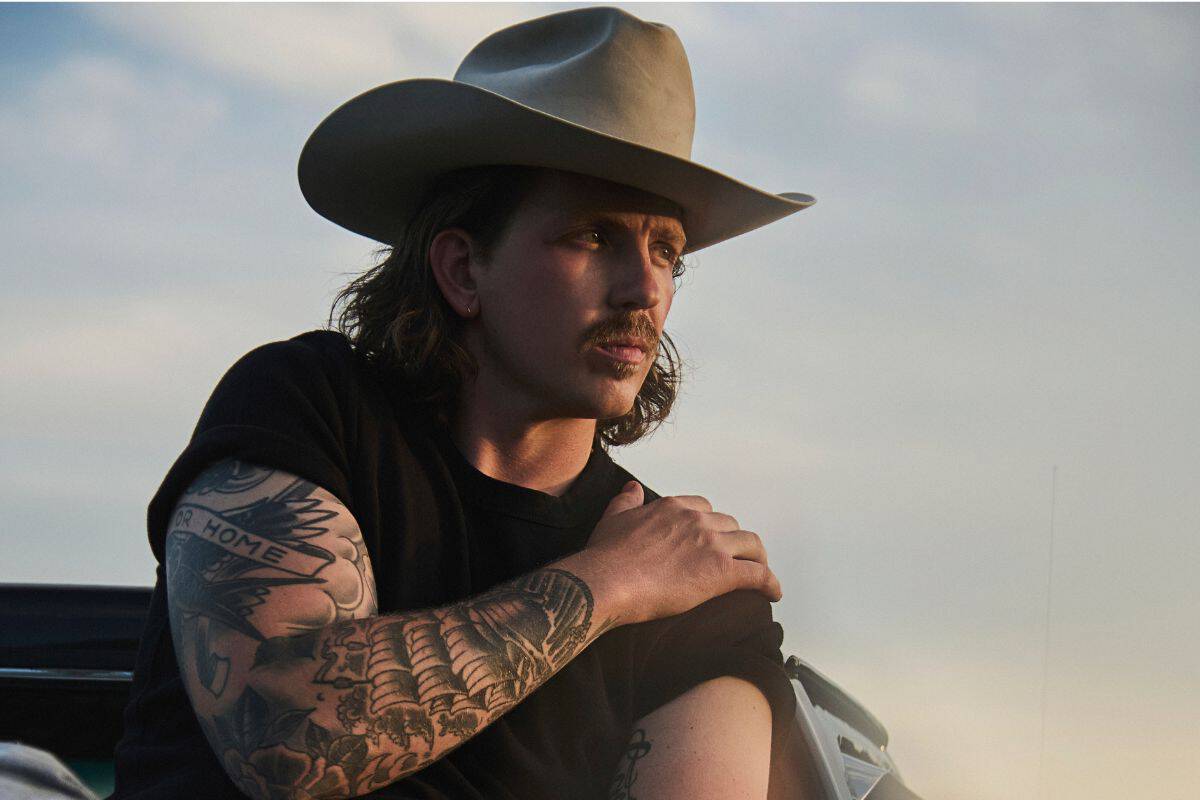
Evan Bartels; Photo by David Higgs
Growing up in a town of just over 100 people in rural Nebraska, Evan Bartels learned early on how to make something out of nothing. Music became a natural outlet for him, first through playing in bands in his teens and eventually through songwriting, recording and performing his own music. Along the way, he gained experiences that have shaped the raw, deeply personal storytelling that lives at the center of his music today.
Bartels credits his parents for always encouraging his love of music and pushing him to believe it was something he was meant to pursue even in the moments of doubt. Now, after years of chasing that dream, he’s also building a family of his own while continuing to grow his career in Nashville.
That journey has recently entered a new chapter with his latest releases, “Thunder” and “Go Down Swinging,” the latter of which arrived today (Sept. 18) via Joan of Arc Records. The two songs show off a bigger, more energetic and hard-hitting side of Bartels, who says he wanted both tracks to feel like “underdog anthems.”
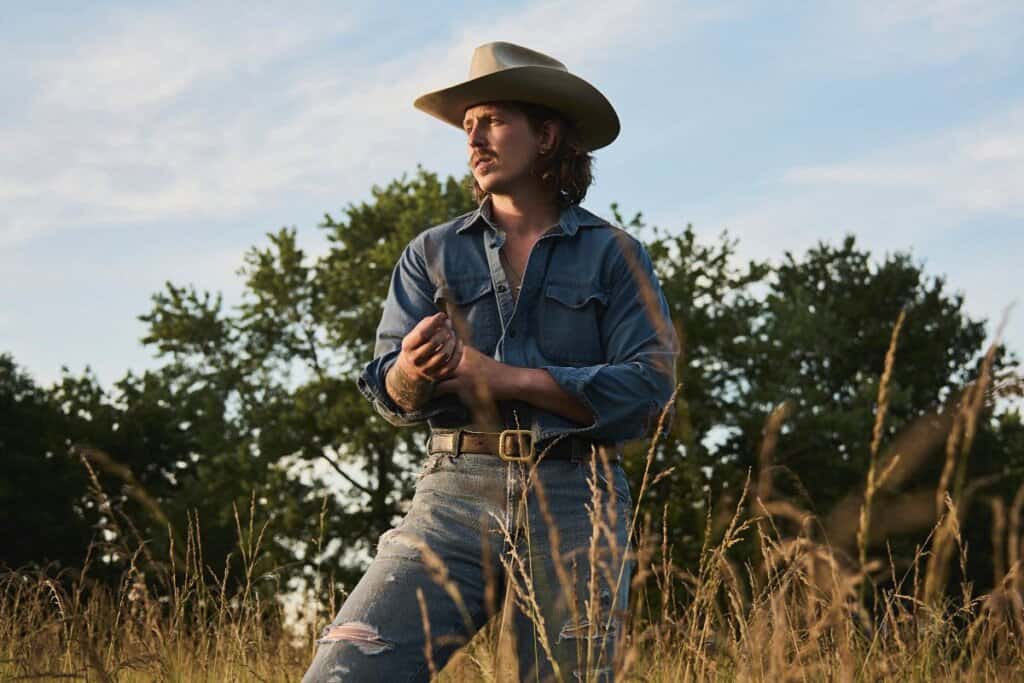
Previously featured on CBS’ hit drama Fire Country, “Go Down Swinging” was written by Bartels and Randall Kent and revolves around the drive to face adversity head-on. The song finds the character uncovering the strength to get back up and refusing to take no for an answer, a mindset that Bartels strives to have in his everyday life.
With more stories of overcoming challenges, faith, and redemption on the way, Evan Bartels joined Country Now to talk about how his small-town upbringing impacted him, getting his start in music, the lessons behind his newest songs and what’s coming next.
How did growing up in such a small town impact the person and artist you are today?
I always like to say it was one of those western towns where it was like a train stop essentially, and then one day the train quit coming. So my family had been there for generations. They came over from Germany in 1870 and went through Chicago and then settled in Tobias, and that’s where we homesteaded and did all of that. And basically everybody stayed there for years. And so that’s where I grew up. Family farm, a mile outside of town, and we’d go out there all the time. And even town was, we had one kind of asphalt road that ran through it that had the fire hall, a post office, a little bar, a hair salon, and a Coke machine. And so growing up out there, it was wild because it was very feral, but you didn’t really know anything different. And so you had to entertain yourself a lot. And then as you get older and that entertainment becomes different things like drag racing hot rods and having giant bonfires and fields and doing all this sort of s**t…everything out there was very do it yourself and it was all oriented in if you didn’t have something that you need, you built it. And once you got something, you fixed it. You just didn’t throw things away. And so that’s just been in my DNA for a long time, and I think it made me deeply sentimental, which is two things that have served me well as a songwriter and as a musician, whether it be touring musician or recording musician, whatever it is, because you learn how to get scrappy.
At what point did music start to become a bigger part of your life?
I spent a lot of early time on the road where I worked my way up from playing an open mic night in a city an hour away, having to drive an hour to get up to Lincoln to play an open mic night when I was in high school. And then I got hired into a country cover band where we played, I think I was 17, I was halfway through my senior year and all these other guys were like 35, 40. And we would play three, four nights a week doing honky-talks and county fairs and weddings and street dances and all this sort of stuff. And so that really started getting my beak wet. But the only way that I would start knowing how to do those things is that small town mentality of you have to just work. That’s just what life is. If you want something, you got to work for it. And so that’s kind of where it went.
What did you take away from that early experience of being so young in a band?
I learned how to do a lot of things in that band. I learned how to be in a band, as time went on and they started saying, ‘Hey, we’re going to have you sing these songs,’ well, then you learn how to front a band for real, on a real stage with hundreds of people there. And then they go, ‘Well, hey, we’re going to play a couple of your songs.’ And then I was booking my own gigs where I’m playing at bars and breweries and little venues all around by myself. Then made my own album with my own band. And I feel like my life and career has been coming sort of nothing from nowhere and then getting a little bit bigger and then starting over, just always starting over.
How much influence have your parents had over your love for music and pursing this career?
Both of my parents truthfully have been the biggest gift because unlike a lot of people, both of my folks would tell me from a child, they’d be like, ‘Not only can you do this,’ they would say, ‘you’re supposed to do this.’ I Remember we grew up in a pretty religious home, which is something that’s still a north star for me. And just the belief in divine purpose. And my mother and my dad would say, ‘God has a plan for everybody and this is a part of yours.’ And I believed him. And that meant the world to me then, and it still does now. My mother is the one who got me started on playing piano, and my dad, he had a 69-ovation acoustic guitar that he kept in the hall closet and a little banjo. When I was about four years old, my mom had saved up enough Betty Crocker box stop points and sent them in four-string ukulele out of a Sears catalog. And so some of my earliest memories was being like, ‘Dad, can we jam?’ And I’m like four years old.
My dad had picked a little guitar in his younger years and had wanted to be in bands and stuff. And I know his brother did too. My Uncle Doug, he ended up teaching me how to play “Sweet Home Alabama”…and then in that same range, we were super outdoorsy. We grew up hunting and fishing and setting traps for coons and coyotes and all that deal. And so I wanted to be this mixture of a cowboy, a mountain man, Elvis Presley.
What inspired the storyline behind your newest release, “Go Down Swinging”?
I wrote that song with my friend Randall Kent, who’s a great producer and songwriter here in Nashville. And we actually wrote it two or three years ago. I’ve just been sitting on it waiting for the right time to use it the way that I want it to because I like to do everything on purpose. And I remember the day we wrote it, we were sitting over in his studio and I was like, “Man, I want to write something today that feels…” And this might sound a little dumb or a little cheesy, but I was like, “I want to write something that feels like a superhero.” I think there’s very different types of vulnerability, and vulnerability is something that I always want to have in my songs and the songs that interest me. And this was just a different take on it of saying, “What happens if you do bury your teeth a little bit?” There’s all sorts of things going on in the world at any given time too that it was like, “Man, how many times in our life do we feel like we don’t have control?” What if we just said, “Damn it, man. I’m going to grab the steering wheel on this and I’ll go down with the ship if that’s what it takes, but I’m going to try to be the captain of my own life for a second here.” And it’s like, if somebody’s telling me that I gotta do this and that I can’t do this, I’m not going to believe it…You just go, “No, dude, it’s not about succeeding. It’s about trying.” And that’s what I had wanted to write a song about.
Why did you wait until now to release it?
We recorded this demo and it was so sick. And I was like, “F**k, I love this song.” But it wasn’t the right time for it yet, and so we just held onto it. And then I was in a label deal last year that I got out of two days before I was going into the studio. I was like, “Well, is it going to change what I’m going to record when I go to this studio?” And we only had one day to do two songs…I heard John Mayer say years ago that he never wants to make the same album twice, and that’s true for me as well.
When I went into this new deal with Cindy and this whole team over at Joan of Arc, I told them, “Hey, I recorded these two songs that I would love to put out with you guys.” So that’s why these are the first two singles that we’ve been going with, because I just made them because I loved them. They were exciting to me. Luckily, everybody on the team was also like, “Yeah, these are bangers.” So it’s been really fun shifting gears, because the last thing I did was very singer-songwritery, which will always be in my heart, but I was like, “Man, I want to turn it up to 11 or 12 for a couple of these.” So that’s what we did.
Talk about “Thunder” and the powerful realization that comes through in the narrative.
Any song that I’ve done, I’ve always wanted there to be a redemptive quality to it, and I’ve never wanted to shy away from the anger that myself or other people feel in life or the fear or disappointment. But one thing that I have always shied away from in the past sometimes I realized is the joy. I was like, “Man, what if I didn’t do that in my music or just in my own life? What if I let myself really experience the joy that I’ve always wanted to feel? What if I’m the one standing in my own way?” And then you go like, “Son of a b***h, I think I was this whole time.” You just figure out one day, if you can’t be happy where you are, it doesn’t matter where you go because you’ll never be happy there either. So it’s just a lesson in gratefulness and being grateful for where you are and when you are, and being grateful for all the struggle that gets you there. Celebrate the little wins, celebrate the big losses, because sometimes the big loss is actually the biggest win in your life. And so it’s just been restructuring that thought process and then channeling that into songs.
What do you hope fans will take away from hearing you share your personal story and the vulnerable emotions you put forth in these songs?
Anything that I’m saying, anything that I’m figuring out in my life, that’s not new. There have been people that have figured that out and knew it before me, but I didn’t learn all of that from an ancient Greek philosopher or from a therapist or from this or this or that. I’ve learned that from talking to my dad in a deer blind, talking to guys at a bar or a VFW or my friends who are in similar situations, sitting down with them and deciding to open up. I don’t claim to know everything or have answers, and I never want to tell people what to think or how to feel, but it’s like, if you figure something out worth sharing with the class, you should share it. There might be a hundred thousand people out there that hear it and go, “Well, yeah, no s**t, dummy.” But there might be one guy who goes, “I heard this before, but the way you’re saying resonates with me.” And that makes it worth it.
Can fans expect to get more new music in the near future?
Oh, yeah. Ever since “Thunder” came out, that’s opening the floodgates for just new music coming out over the course of pretty much the whole next year. I’ve got a lot of secret stuff that I’ve been working on that you’ll be the first to hear about, going in this direction that I’m describing, wanting to see how far can I push my sound and how far can I push my taste and my ability as a singer or as a songwriter. It has been a hell of a year in the studio and the writing rooms and putting this all together. And so now as we start to unveil with “Thunder” and “Go Down Swinging” and then something else that I’m not supposed to say, but is going to be coming super soon after that, I think it’s going to be a wild ride. And you always hope that a lot of people are going to hear it and that a lot of people are going to love it. That would be super sick. But even if five people hear it and it resonates with one of them, I’m going to be stoked because it’s literally changed my life…I just feel grateful to be here and to learn the things that I’ve learned and realize that in another 15, 20 years, I’m going to be a different person than I am now. And I can’t wait to find out what that guy’s going to know.
Fans can keep up with Evan Bartels on Instagram.

Madeleine O’Connell graduated from North Central College with a bachelors degree in Journalism and Broadcast Communications before deciding to pursue her studies further at DePaul University. There, she earned her masters degree in Digital Communication & Media Arts. O’Connell served as a freelance writer for over two years while also interning with the Academy of Country Music, SiriusXM and Circle Media and assisting with Amazon Music’s Country Heat Weekly podcast. In addition to Country Now, she has been published in American Songwriter, Music Mayhem, and Holler.Country. Madeleine O’Connell is a member of the Country Music Association and the Academy of Country Music.
You may also like



Country Next
Playlist
On Repeat


Get the latest country music news delivered straight to your inbox.
