

Country Artist Spencer Crandall Opens Up About ‘Dark Days’ of Eating Disorders and His Journey Toward Healing
“Body image stuff can be brutal, but you aren’t alone,” Crandall told fans.

Photo Courtesy of Spencer Crandall
Spencer Crandall is opening up about a difficult chapter of his life, that gives fan a look into his personal struggles outside the music he makes. In a vulnerable and heartfelt post, the country singer is sharing his battles with body image, eating disorders and sobriety, in hopes that telling his story might help someone else feel a little less alone.
Although he admitted he was “nervous to hit post” on the story he shared to Instagram, Crandall revealed that he felt like it was time for him to open up about his entire health journey through the years, including “the good, the bad and the ugly.”
“I’m a guy who suffered from eating disorders. I feel like men don’t talk about this stuff enough, so I’ll go first,” he wrote.
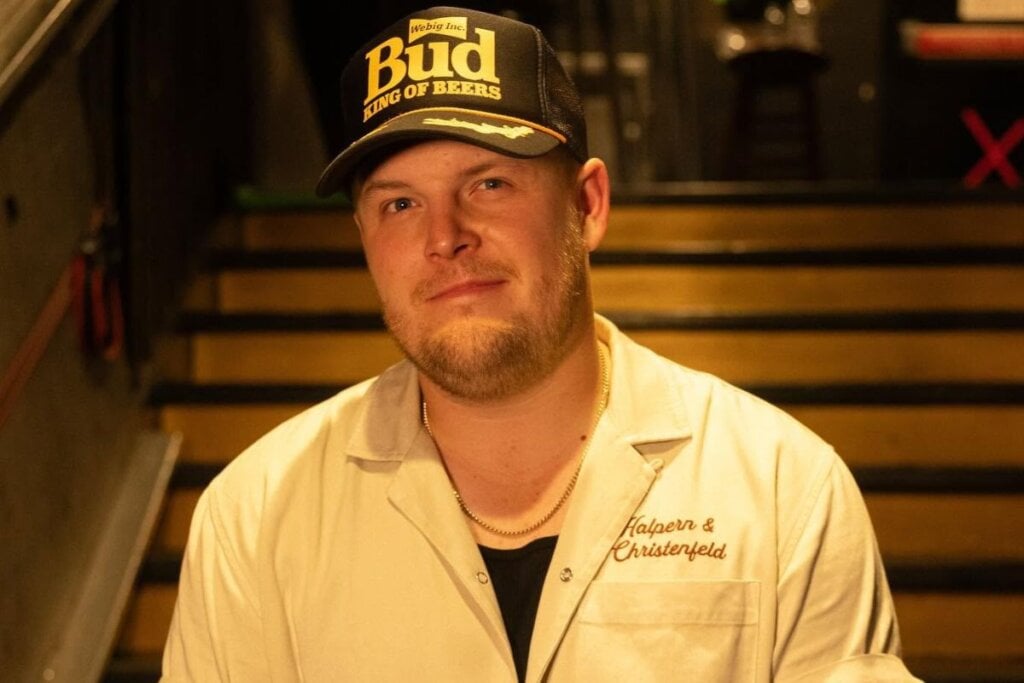
Crandall started off the post by taking things back to his childhood, when he considered himself to be a “bigger kid” that leaned heavily on humor to cope.
“I was always the first one to make the joke, but deep down, I HATED being a bigger kid,” he admitted.
Eventually, he says he discovered a love for sports, particularly football and wrestling where being a “bigger kid” was considered to be an “advantage.”
“I had community and made friends for life. I even got a college scholarship to play football. But when I got to college, my world got flipped upside down. I got 2 massive shoulder surgeries, and my spots career was over, now what?”
Crandall was starting to feel like he fit in thanks to sports, so when that dream came crashing down, it was almost as if he was starting over. He had to find a new passion by making music in his dorm room and this turned out to be what he deems is his “true calling.” However, his struggles with his body image still remained in the back of his mind.
“I had gained all this weight for football. And now when I googled “country singer” Brett Young and Tim McGrraw popped up. Tall, jacked, LEAN.”
He worked hard in the gym and eventually reached his goal weight. But instead of feeling satisfied, he became fixated on watching the number on the scale drop. No matter how much weight he lost, it never felt like enough.
“I didn’t stop. In fact, I couldn’t stop. I remember getting this photo back and being almost in tears. All I could think was “I look so fat. I had come so far from the kid in high school who I was so ashamed of, but when I looked in the mirror, I still saw myself the exact same way.”
And then came what Crandall calls “the dark days.”
“Full blown eating disorders. Going full days without eating. Throwing up if I ever felt full. I was starting to see a number on the scale that looking back is terrifying.”
In the next slide, Crandall shared a photo from a photoshoot early on in his career that was taken in the midst of his battle with an eating disorder. Instead of the image representing a moment in his music career, what he remembers most is how he felt that day. He hadn’t eaten in more than 36 hours and was lightheaded and weak. Despite having lost nearly 80 pounds, he still looked at himself and thought he was “so fat.”
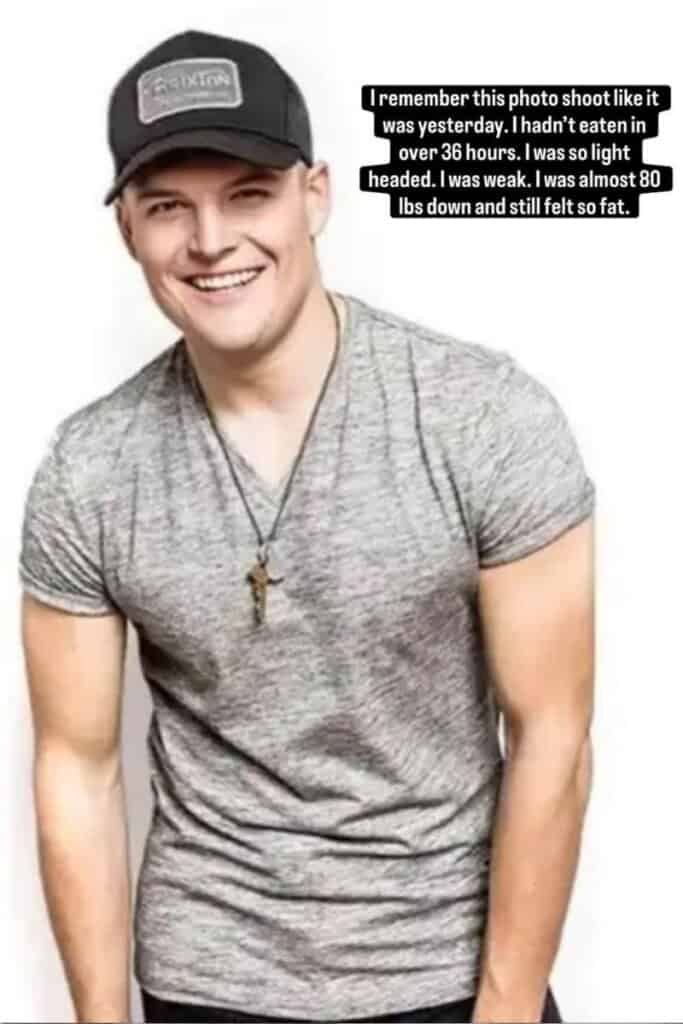
Crandall knew that something had to change. He got sober, started going to therapy and healing the wounds of his childhood and as a result also got his eating disorders under control. However, he soon learned that “dreams come with a price.”
“My music started taking off. I felt like myself again. I felt free. Everything was looking up…Touring led to me being EXTREMLY anxious and depressed. So what did I do now? I started to self-medicate again. Alcohol wasn’t an option but late-night snacks were. And the gym goes out the door when lobby call is at 4am. I blinked and 1 year turned to 5. I gained almost every lb back,” he recalled.
“I started to feel like the fat kid again. I started to hate myself again. The way I spoke to myself was nasty and cruel. I knew that starving myself wasn’t an option anymore. I had to figure out how to have a better, more sustainable relationship with food, my health and weight.”
That brings us to today, where Crandall says he’s working toward a healthier version of himself. While he may not be entirely happy with where his weight stands right now, he’s determined to get back to a place where he feels good without sacrificing his mental or physical health in the process. This time, he’s taking a slower, more sustainable approach and is finally feeling proud of the progress he’s making.
“Am I heavier than I wanna be? Yeah. But am I starving myself? Hell no. This year my goal is to lose 31 lbs in my 31st year but do it in a healthy way. I’m really close and I’ve done it slowwwwly and in a way that I can sustain moving forward,” he explained. “Do I have everything figured out? Helll no. But I’m actually really proud of myself. I’m on track to hit my goal AND I’m doing it in a way that is life GIVING instead of life DRAINING.”
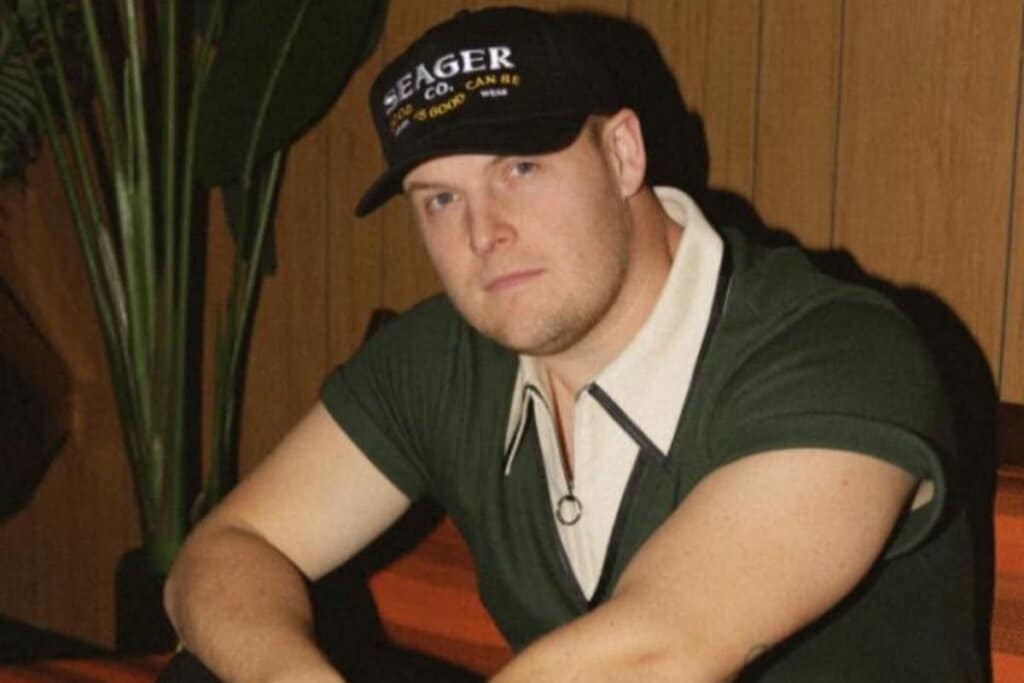
The “Changed Man” singer is still working toward his fitness goals while learning to embrace a healthier relationship with his body. He plans to share more of that journey as he trains for a HYROX competition on November 14.
“I’m currently in the best shape of my life (post eating disorder) and now I’m training for a HYROX on Nov. 14 so I’ll start sharing more of that process as well.”
By sharing these candid words and photos documenting different moments throughout his health journey, Crandall hopes to show that healing isn’t always linear. ultimately hopes that sharing his story will help even just one person “feel less alone.” He also encouraged anyone who could relate to his experience to share their own health journey in the comment section.
“Body image stuff can be brutal, but you aren’t alone. We all have a story. This is mine,” he added in conclusion.

Madeleine O’Connell graduated from North Central College with a bachelors degree in Journalism and Broadcast Communications before deciding to pursue her studies further at DePaul University. There, she earned her masters degree in Digital Communication & Media Arts. O’Connell served as a freelance writer for over two years while also interning with the Academy of Country Music, SiriusXM and Circle Media and assisting with Amazon Music’s Country Heat Weekly podcast. In addition to Country Now, she has been published in American Songwriter, Music Mayhem, and Holler.Country. Madeleine O’Connell is a member of the Country Music Association and the Academy of Country Music.
You may also like


Country Next
Playlist
On Repeat


Get the latest country music news delivered straight to your inbox.
