

Country Next: Madden Metcalf
We’re proud to showcase country music’s brightest new stars through our Country Next series. In this installment, we talk to Madden Metcalf.
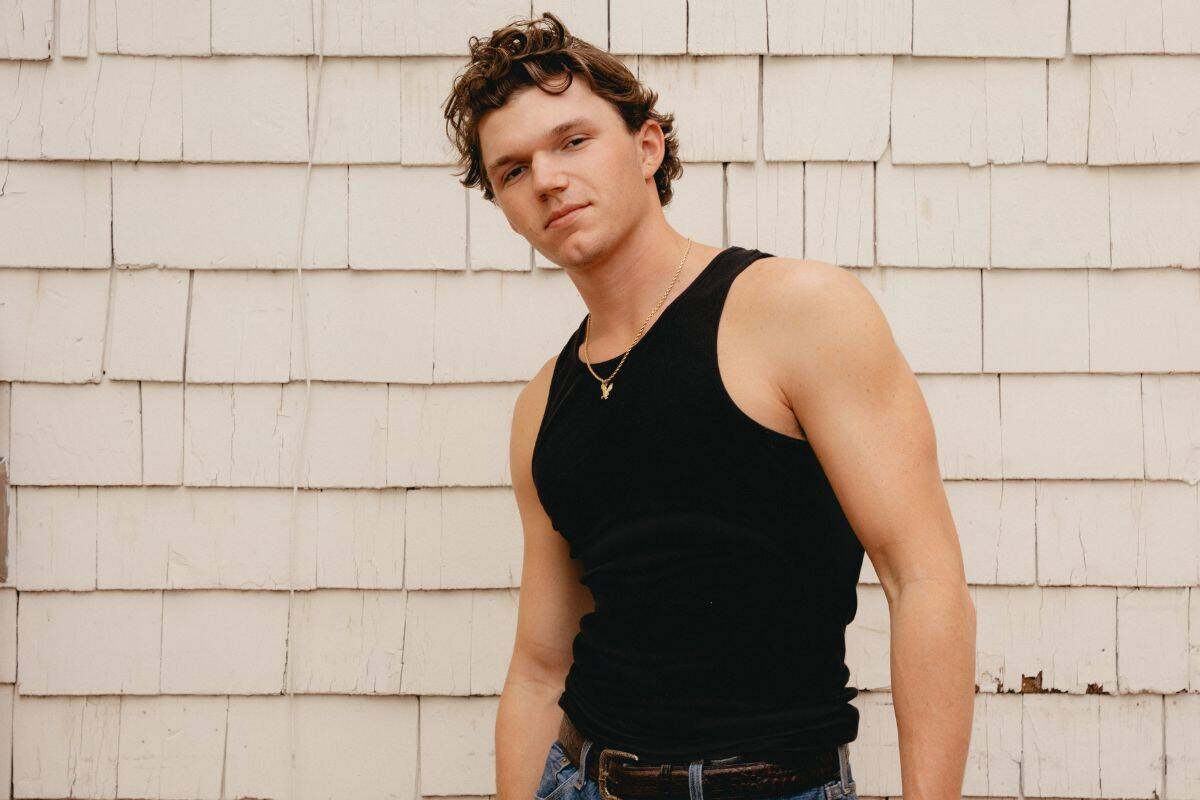
Madden Metcalf; Photo by Brandon Espeleta
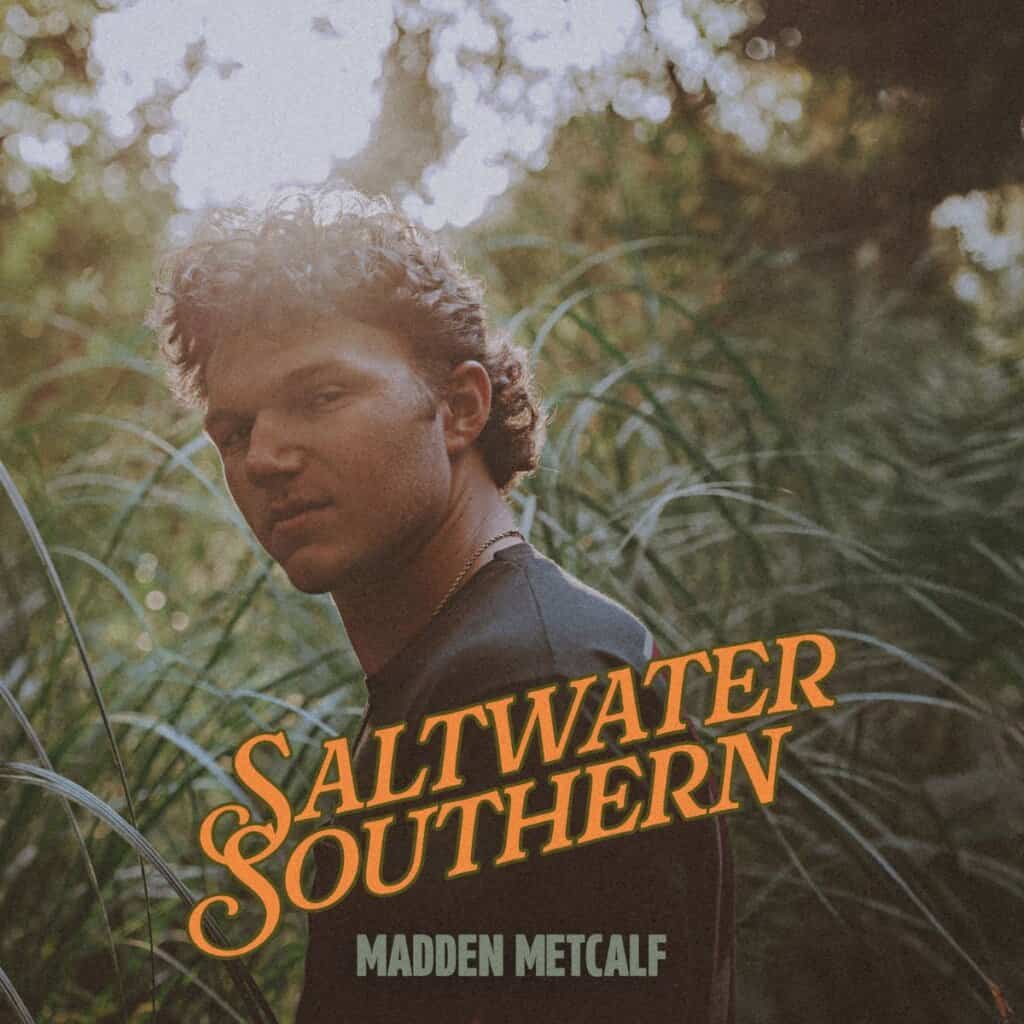
Somewhere between long days on the water, late nights working at a local restaurant, and time spent in his dad’s pole barn, 20-year-old Madden Metcalf found his way to country music. Now, the Panacea, Florida native is introducing himself and his timeless storytelling with his debut EP Saltwater Southern, out today via Wexler Records/MCA.
Produced by Paul Sikes and GRAMMY-nominated songwriter/producer Freddy Wexler, the five-song collection introduces Metcalf as an artist grounded in where he comes from and unafraid to show where he’s going. The project blends raw emotion with a laid-back coastal influence, drawing inspiration from the sounds of the legends he grew up listening to like Johnny Cash and Jimmy Buffett.
Serving as a co-writer on every track, he puts both vulnerability and growth on full display through standout songs like his major-label debut “Like My Hometown,” the vulnerable breakup anthem “I Don’t Wanna Cry Anymore” and his latest, “Kinda Paradise.”
As he continues to find his footing in Nashville while still staying true to his roots, Metcalf is quickly proving he’s an artist worth paying attention to. In the exclusive Q&A below, he opens up about the influences that shaped him, the stories behind his first project, and even a surreal moment with Luke Bryan that he says he’ll never forget.
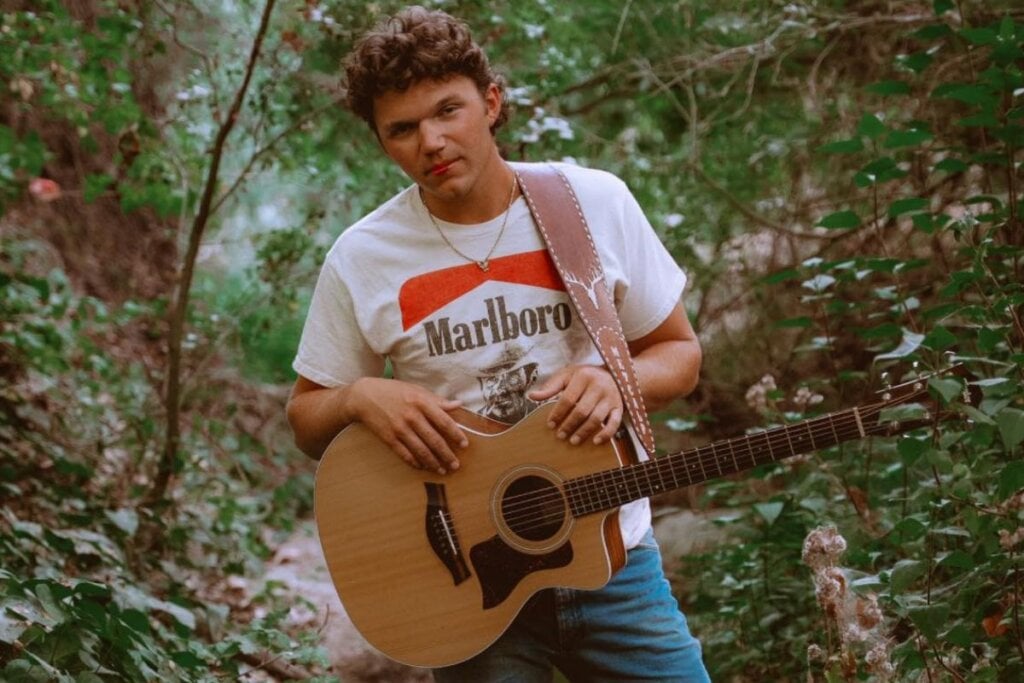
What was it like growing up in a small town on the Gulf Coast of Florida and how has it shaped who you are today?
Growing up in North Florida is really, it’s very niche and it’s very overlooked because people don’t really see what we see. We’re raised hunting and fishing like everybody else, but we’re just on the Gulf. Instead of being landlocked, we were raised on the boats and hunting on land, whatever. And the Saltwater Southern meaning of everything really brings all that together. And I really love that we came up with something that’s so perfect to describe where I come from.
How did listening to music with your dad in his pole barn shape your career and passion for country music?
We’d go out there and work on whatever we were working on that day, working on boats or whatever. And he’d always play music. And I just asked him one day, I was probably 10 years old, I said, “Why do you love music so much?” And he’s like, “It’s not so much the music.” He said, “If you can’t be told a story from a song, you don’t need to listen to it. ” I started listening to the storytelling from every song I heard, and that’s when I really fell in love with just music, country music as a whole.
Who were some of the artists you were listening to back then?
Jimmy Buffett. We always listen to Buffett, Kenny Chesney, Bob Marley, that’s our boat playlist, Zac Brown. And then there’s Waylon Jennings, Merle Haggard, Johnny Cash, and then everybody in between.
At what point did you get into performing?
I was working at the restaurant and actually, I’m in town this week. So after we’re done here, I’m going to help at the restaurant just because I kind of miss it sometimes. Did the same thing on the crab boat the other day, but it really happened, I was 13 or 14. I was working in the back of the restaurant and fun fact, there’s no child labor laws when your dad’s best friends with the owner. And I asked my dad’s best friend, I call him uncle, I said, “Hey, is it okay that I go out there and play the same 10 songs for two hours?” And he said, “Yeah, sure. As long as you get back in this kitchen and clean up.” So I went out there and I played for an hour or two and I made like 50 bucks and I thought it was the coolest thing because all I was making in that kitchen was $8.50, $9 an hour. So I was like, “I just played for an hour and a half and I made 50 bucks. Maybe I can do something with this. Ever since then, I just started playing live more and really focusing on entertaining and what I can do to get people behind the music. And I started really taking writing seriously when I was a freshman in high school and off to the races from there.
Did you teach yourself to play the guitar? When did you decide you wanted to learn that skill as well?
My parents divorced in October of 2018 and me and my dad needed something besides football to bond over. So we went to a Riley Green show backstage in 2018 and I asked my dad when we got to the house, I was like, “I want to do what he did tonight at Florida State.” And my dad was like, “All right, well, let me teach you”…now he likes to say within a few months, I was coming back to his house and I was better than him and that meant a lot for my dad’s big head to be able to do that.
What is it like getting to have your dad now come out to your shows now and see that you’re really doing this thing?
I mean, just being able to call him and tell him about everything and I screen share my performances that he couldn’t make it to or whatever and he just grins ear to ear and I do the same thing with my mom and everybody’s so proud of me back home and that’s what really means the world.
Now that you’re an artist of your own, how would you describe the sound you’re trying to create?
I think I’ve always thought of myself as, I love music and I don’t limit myself to country music. I’ve always said, if it tells me a story and I can feel something from it, then I don’t care what kind of music it is. So if somebody can get the feel of certain songs of mine, kind of paradise feels like you’ve got your feet propped up on the beach, that’s on my upcoming EP, Saltwater Southern. And just if I can make somebody feel like in the middle of January that they’re sitting on a beach with a drink in their hand, then I think my job’s done.

You made your label debut with “Like My Hometown.” Why was this the right one to mark your introduction?
“Like My Hometown” is so special to me because you can know a lot of people in a lot of different ways, but every now and then you get to know somebody the same way you do your hometown. And I don’t mean like love them or … I mean, knowing the good, the bad, the ugly, every little thing. And I thought that was super special, especially for me, for somebody who loves my hometown so much and I know every corner and every turn, every stop sign. So I thought that was a really special kind of thing and a lot of people connected with it. And we wrote that song last year at some point and then we decided to put it out with MCA and I don’t think there was a better song to make my label debut with MCA.
More recently we got, “I Don’t Wanna Cry Anymore.” Tell me about this one.
“I Don’t Wanna Cry Anymore” is very, very important to me because it really shows the vulnerability that I can have and that the co-writers, Elliah Heifetz and Freddy Wexler. I’m so thankful that we were able to get into a room and have the vulnerability with each other and be so blatantly honest of how we felt in the past and what our vulnerable moments were. So I think there’s something really special about “I Don’t Wanna Cry Anymore”. And it’s really just about hitting that wall and realizing that you’re over it and you’re done and you’re never going back until tomorrow and then you go back again.

When you’re tapping into that vulnerability like you did for this song, are you ever hesitant or nervous to share those stories with the world?
When it comes to writing, I got a lot of my influence from Parker McCollum and he said one time, he’s like, “I could be the happiest man in the world and I’m still going to write a song about love going terribly wrong.” And I was like, “Okay, so I’m not the only one.” Unless I’m in a room with people with other people with really good vibes, it usually comes down to some type of heartbreak, but the second I’m in a room with other people, I can unleash the other ideas and we can talk about it and get the balls rolling with that.
What do you hope that listeners take away from hearing the songs on your debut EP, Saltwater Southern?
We were like, “Alright, let’s get some songs out there that define Madden Metcalf. “Who’s Madden Metcalf?” And we chose the five total songs and we were just like, “Okay, this is Saltwater Southern. This is Madden Metcalf. This shows every aspect of what I can do and my influences.” And it really just, I couldn’t think of any … I don’t think there’s a possible way we could have made the EP anymore me. And so I’m really ready for people to just hear what I can do and see what I can do and just listen to Saltwater Southern and understand what that means.
Lastly, you recently shared a video of a special moment where you were playing piano alongside Luke Bryan. How did that moment come about?
I would never say this in front of him, but I grew up on Luke Bryan because growing up in the 2010s, Luke and Jason Aldean ran country radio. And so I introduced myself to him and kind of just wandered around for a little bit, but he thought it was the coolest thing that I was from Panacea, called me Panacea the whole night. And I was like, “You know what? Luke Bryan calling me Panacea, that’s just fine.” And I thought to myself, I’m like, on this road to being successful in the industry, a lot of people can take away a lot of things and give you certain things, but no one can ever take away that memory of me sitting down with one of my, I would say one of my heroes in the music industry and just being able to sit down and play Conway Twitty and Willie Nelson and Ray Charles and Earl Thomas Conley with Luke Bryan was just the craziest thing in the world. But I understood very quickly that he’s a human just like I am. And that was a pretty crazy thing to understand.
Fans can keep up with Madden Metcalf on Instagram.

Madeleine O’Connell graduated from North Central College with a bachelors degree in Journalism and Broadcast Communications before deciding to pursue her studies further at DePaul University. There, she earned her masters degree in Digital Communication & Media Arts. O’Connell served as a freelance writer for over two years while also interning with the Academy of Country Music, SiriusXM and Circle Media and assisting with Amazon Music’s Country Heat Weekly podcast. In addition to Country Now, she has been published in American Songwriter, Music Mayhem, and Holler.Country. Madeleine O’Connell is a member of the Country Music Association and the Academy of Country Music.
You may also like
Country Next

Playlist
On Repeat


Get the latest country music news delivered straight to your inbox.
